

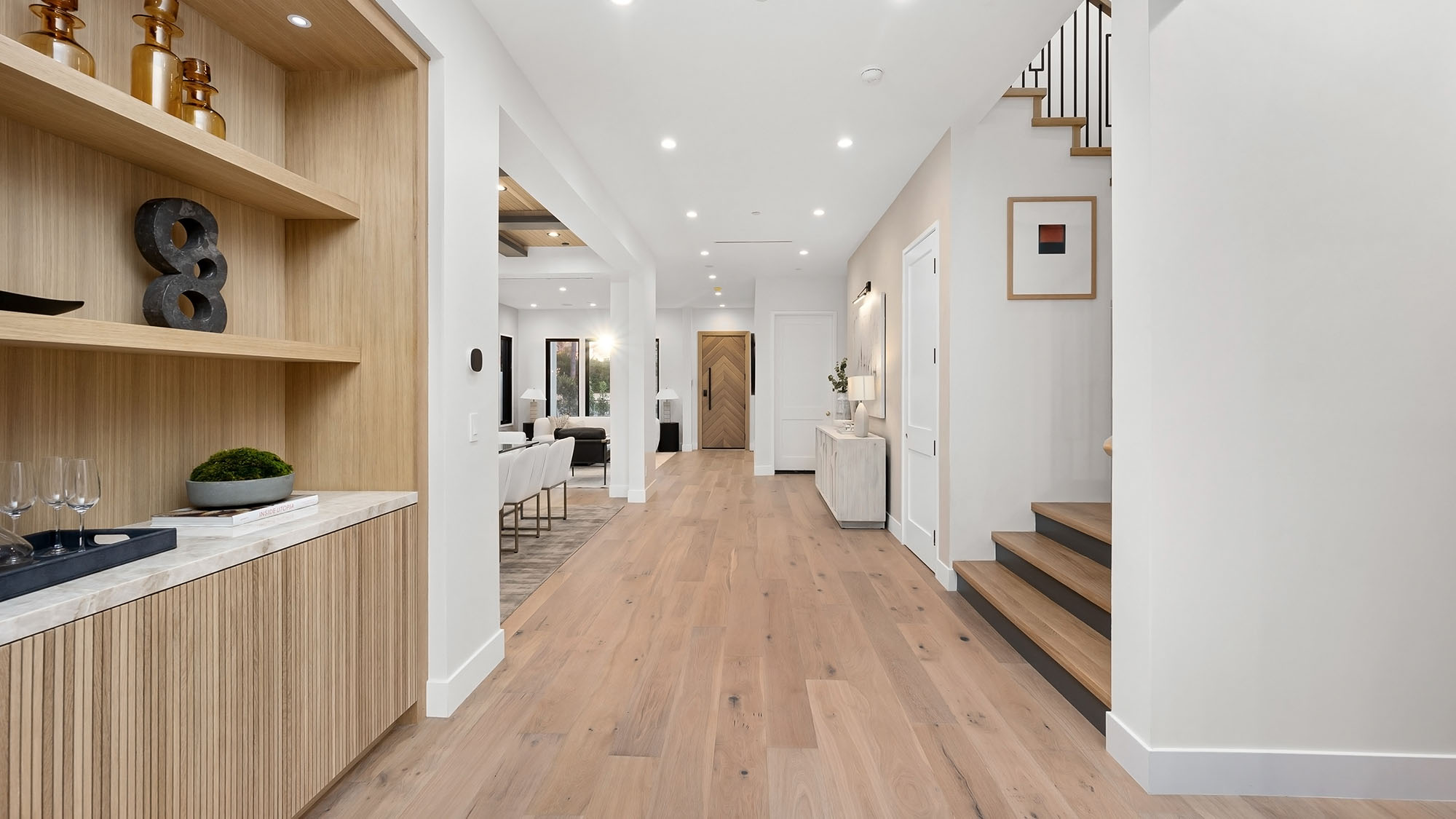
Natural hardwood floors bring warmth and organic beauty to an interior, but active households often demand greater surface durability and moisture resistance. Modern laminate flooring bridges that divide effectively. Advanced photographic layers, realistic embossing techniques, and balanced gloss levels allow high-grade laminate to mirror genuine oak, hickory, and walnut boards.
Achieving an authentic look depends entirely on the finish details. If you evaluate surface texture, sheen, plank construction, and lighting conditions before you buy, you can avoid a flat, plastic look and secure a floor that looks authentic underfoot.
Surface Texture and Embossing Techniques
Surface texture separates convincing wood-look laminate from outdated alternatives. Smooth laminate boards reflect light evenly across the plank, exposing artificial print patterns. Realistic planks feature three-dimensional textures that align with the printed grain beneath the wear layer.
Embossed-in-Register (EIR) Planks
Embossed-in-Register technology represents the gold standard for realistic laminate. In an EIR product, mechanical embossing rollers press exact indentations, grain lines, and knot textures directly over the photographic image. When sunlight strikes the board, the physical relief matches the printed oak or walnut grain beneath it. This alignment creates organic depth and tactile realism when you walk across the floor barefoot.
Hand-Scraped and Wire-Brushed Textures
Traditional artisan wood floors feature distinctive structural character. Modern laminate replicates these traditional styles through hand-scraped and wire-brushed finishes.
Hand-scraped finishes recreate the subtle wave and contour produced by manual draw knives on historic timber. This texture fits rustic, farmhouse, and Spanish revival designs across South County homes.
Wire-brushed finishes pull the soft grain from the plank surface, leaving the hard grain exposed with fine striations. This muted, matte profile hides tracked-in sand, fine pet scratches, and everyday dust.
Gloss Levels and Light Reflection
Gloss level dictates how light bounces across your floor. High-gloss finishes create a slick, mirror-like surface that emphasizes micro-scratches, smudges, and subfloor imperfections. For authentic hardwood aesthetics, low-reflectance surfaces perform best.
Matte and Low-Gloss Finishes
Natural oil-rubbed hardwoods reflect minimal light. Choosing a matte or ultra-matte laminate finish gives your home that raw, contemporary European white oak appearance. Matte surfaces diffuse bright overhead light rather than reflecting glare, which keeps the photographic pattern beneath looking natural at every angle.
Satin and Semi-Gloss Finishes
Satin finishes provide a gentle, candlelit glow without producing sharp reflections. A satin sheen works well in spaces with lower natural light exposure, adding visual warmth without creating the harsh shine associated with synthetic materials.
Edge Profiles and Board Proportions
Authentic wood floors never sit as an unbroken, flat sheet of material. Real wood expands and contracts, which requires distinct board boundaries. Planks with the right edge profile and scale anchor the visual credibility of your room.
Beveled and Painted Edges
Square-edge laminate planks snap together flush, hiding the seam. While this creates a uniform surface, it eliminates the natural shadows that define individual wood boards. Planks with micro-beveled or deep-beveled edges create small V-shaped grooves between boards. Deep painted bevels highlight the individual plank geometry, creating the authentic shadow lines seen in site-finished hardwood installations.
Wide Planks and Long Board Dimensions
Short, narrow boards create a visually busy floor with dense seam patterns. Real hardwood installations favor wide profiles that showcase long grain cathedral patterns. Planks measuring at least seven inches wide and five to six feet long deliver an open, expansive presence. Longer planks minimize pattern repeats across open-concept floor plans in Irvine and Mission Viejo homes.
Visual Variation and Plank Pattern Repeats
Visual variation prevents a floor from looking artificial. Basic laminate products repeat their pattern every four to six boards, resulting in identical knots and grain swirls across a hallway or great room.
Premium collections feature ten to twenty unique board designs before a pattern repeats. When your installers shuffle planks from several cartons during layout, they avoid identical boards landing adjacent to one another. Look for finishes that include natural color shifts, subtle mineral streaks, and varied sapwood tones to mimic natural timber sorting.
Southern California Light and Subfloor Considerations
Environmental factors in Orange County influence how your laminate finish looks and behaves over time.
Coastal communities like Laguna Beach enjoy abundant daylight, but strong coastal sunshine can wash out artificial grain layers. Select laminate lines treated with robust UV-resistant wear layers so high sun exposure through large sliding glass doors does not bleach your boards unevenly.
In addition, most local homes sit on poured concrete slab subfloors. Concrete continually emits trace moisture vapor. Pair your laminate with a premium underlayment that features an integrated vapor barrier. A quality acoustic underlayment also eliminates the hollow, clicking sound produced by cheap laminate, giving your boards the dense, solid sound of nailed-down hardwood.
Selecting the right laminate finish requires seeing how plank textures, edge bevels, and gloss levels interact with your home's natural light. Our team at MAC Flooring & Interiors makes material selection straightforward. Visit our Laguna Hills showroom to compare large-format display boards, or schedule an accurate in-home estimate to review samples directly in your living space.
Frequently Asked Questions
Which laminate finish looks most like genuine hardwood?
An Embossed-in-Register (EIR) matte finish provides the most authentic wood look. EIR aligns the tactile surface texture directly with the visual grain pattern, while a matte sheen prevents artificial glare.
Does wide-plank laminate look more realistic than narrow plank styles?
Yes. Wide-plank profiles (seven inches wide or greater) showcase complete grain patterns and cathedral arches. They also reduce the overall number of seams across your floor, mirroring modern wide-plank hardwood floors.
How do I prevent pattern repeats from ruining the realistic look?
Buy laminate that offers at least ten unique plank faces, and make sure your installation team mixes boards from four to five open cartons simultaneously. This practice disperses identical knot details evenly throughout the home.
Are beveled edges hard to clean?
Modern beveled edges feature smooth, sealed protective coatings that keep dirt from sticking. Regular dry sweeping with a microfiber mop or running a hard-surface vacuum easily lifts everyday dust and debris from the micro-grooves.


